
Concrete vs. Asphalt for Commercial Lots — Which is best for your property?
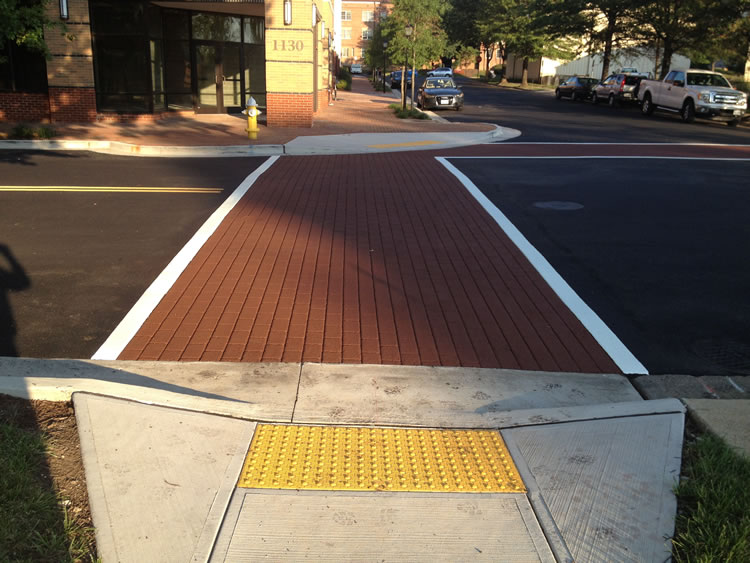
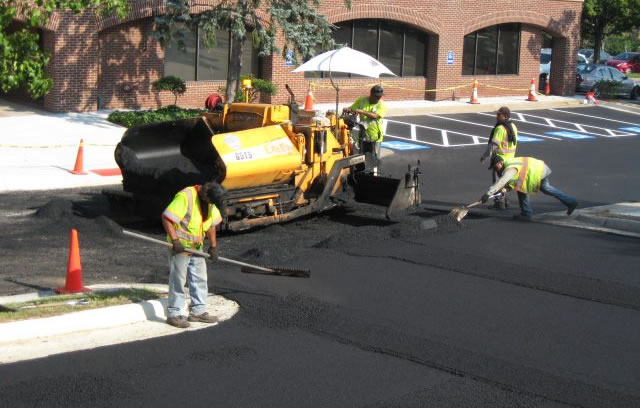
When it comes to building or resurfacing a commercial parking lot, one of the first big questions every property manager faces is: Should I choose concrete or asphalt?
At Espina Paving, we hear this question all the time from owners of shopping centers, HOAs, apartment complexes, and office parks across the D.C. Metro area. Both materials have unique advantages — but your final choice should depend on your property’s needs, budget, and long-term goals.
When planning a new commercial parking lot or pavement project, one of the most important decisions property owners and facility managers must make is choosing between asphalt and concrete. Both materials have advantages, but the right choice depends on factors such as cost, durability, maintenance, climate, and how the property will be used.
At #espinapaving, we help property managers, HOAs, developers, and commercial property owners throughout Northern Virginia, Washington DC, and Maryland choose the right paving solution for their specific needs.
This guide explains the key differences between asphalt and concrete paving for commercial lots, helping you make an informed decision for your property.
Let’s take a closer look at how concrete and asphalt compare in cost, durability, maintenance, and performance — so you can make the best investment for your property.
Key Takeaways: Asphalt vs Concrete for Commercial Lots
- Asphalt is usually more cost-effective for large commercial parking lots.
- Concrete may last longer, but installation costs are typically higher.
- Asphalt is easier to repair and maintain, especially in high-traffic parking areas.
- In climates like Northern Virginia with freeze-thaw cycles, asphalt often performs better.
- The best choice depends on traffic load, budget, and long-term maintenance plans.
 1. Installation & Initial Cost
If your project is under a tight budget or timeline, asphalt often comes out ahead.
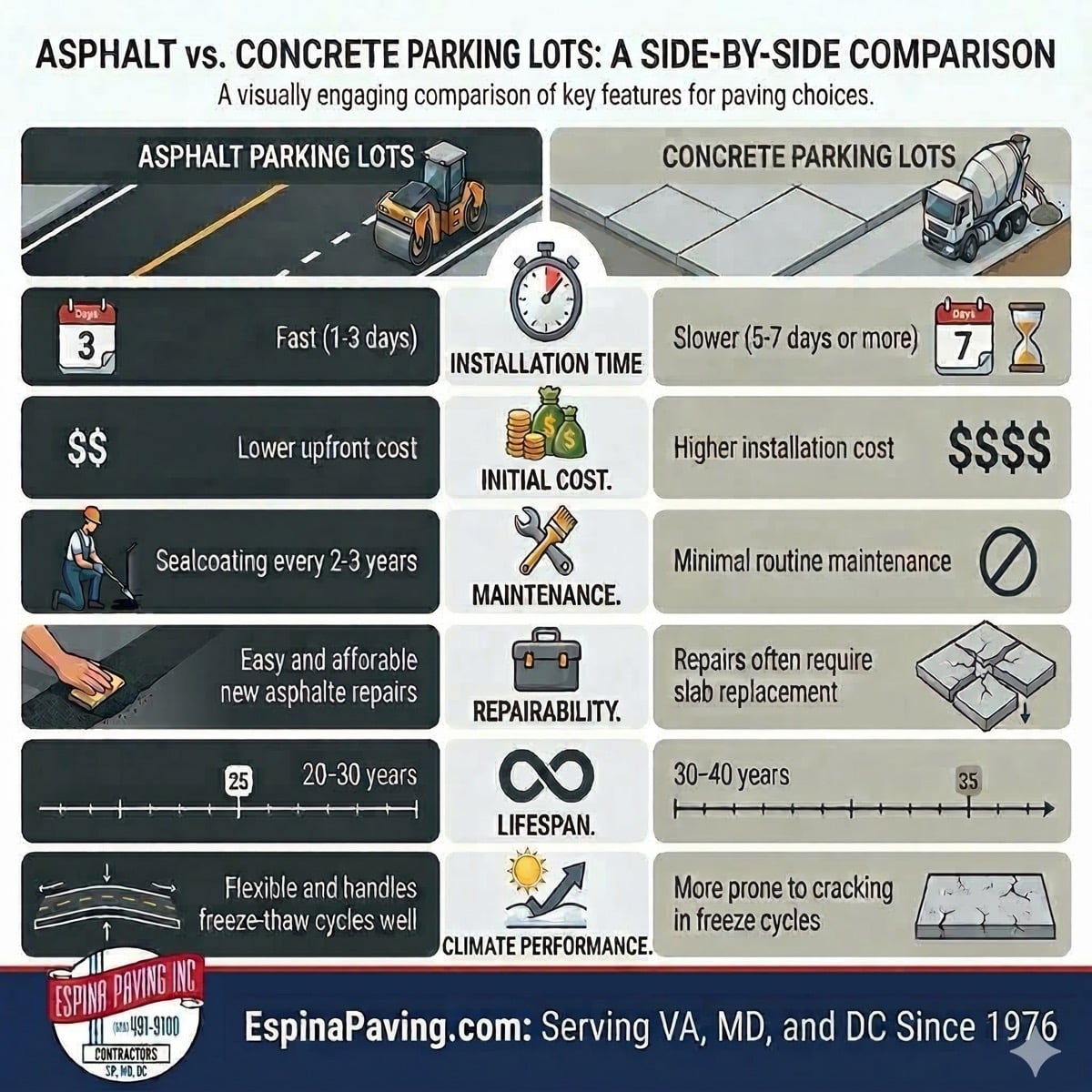
- Asphalt is typically faster and less expensive to install. Once paved and cooled, it’s ready for traffic within 24–48 hours.
- Concrete, while more durable, takes longer to cure — sometimes up to a week before heavy vehicles can drive on it.
 Cost tip: In the D.C. metro area, asphalt lots usually cost about 30–50% less to install than concrete per square foot, depending on thickness and prep work.
Best for: Large parking lots, HOA roads, or properties needing quick turnaround and lower upfront costs.
 2. Durability & Lifespan
This is where concrete has the edge — especially under heavy traffic or hot weather.
- Concrete lots can last 30–40 years or more with proper maintenance.
- Asphalt lots typically last 20–25 years before major resurfacing is needed.
Concrete’s rigid surface resists deformation from heavy trucks and frequent braking. Asphalt, being flexible, handles freeze-thaw cycles better but may soften or rut under extreme summer heat.
At Espina Paving, we often recommend concrete for loading zones, dumpster pads, and drive lanes where heavy vehicles park or turn frequently.
Best for: Industrial areas, truck routes, or properties expecting long-term durability and less frequent resurfacing.
 3. Weather Performance
The Mid-Atlantic’s four-season climate creates special challenges for pavement — from humid summers to icy winters.
- Asphalt expands and contracts with temperature changes, which helps it flex instead of crack in freezing conditions.
- Concrete is more rigid, so it can develop cracks during freeze-thaw cycles if not properly jointed and sealed.
However, asphalt’s dark color also absorbs heat, meaning in hot summer months, it can reach temperatures exceeding 140°F — sometimes leading to softening or scuffing.
Espina Paving uses advanced asphalt mixes and proper compaction to minimize heat damage and ensure long-term performance in the D.C. region’s variable climate.
Best for: Asphalt in cold or variable climates; concrete in hot, dry, or high-load areas.
 4. Maintenance & Repairs
This is often where property managers make their final decision — because maintenance costs over time can change the total value of your investment.
Asphalt Maintenance:
- Requires regular sealcoating every 2–3 years to protect from oxidation and water infiltration.
- Small cracks should be filled early to prevent potholes.
- Resurfacing or milling can restore old asphalt without full replacement.
Concrete Maintenance:
- Needs joint sealing and occasional cleaning but no sealcoating.
- Stains and surface wear are more visible but can be pressure washed or resurfaced.
- Repairs are more permanent but typically more expensive per section.
In general, asphalt paving requires more frequent upkeep but is cheaper to repair, while concrete needs less frequent but more costly fixes.
Best for: Asphalt if you’re comfortable with periodic maintenance; concrete if you want minimal attention over time.
 5. Long-Term Value & ROI
When considering the total lifecycle cost — not just installation — the best material often depends on how long you plan to own or manage the property.

If you plan to hold the property long-term, concrete may offer better ROI thanks to its lifespan and reduced maintenance.
If you’re focused on cash flow and faster ROI, asphalt is the more flexible and cost-effective option.
At Espina Paving, we often help clients choose a hybrid solution — using asphalt for main traffic areas and concrete for high-stress zones like entrances or dumpster pads.
 6. Aesthetic & Environmental Considerations
Beyond function, both materials affect how your property looks and how it impacts the environment.
- Asphalt provides a sleek, uniform black finish that enhances striping visibility and gives a professional look to parking lots.
- Concrete offers a clean, light-colored surface that reflects light, helping reduce nighttime lighting costs.
From an environmental standpoint:
- Asphalt is 100% recyclable, and many of Espina Paving’s projects reuse reclaimed asphalt pavement (RAP) to reduce waste.
- Concrete is also recyclable but less frequently reused on-site.
Both can be made more sustainable with proper drainage design, permeable pavements, and cool-mix materials — options that Espina Paving proudly offers to commercial clients seeking greener solutions.
 7. Which Should You Choose?
Here’s a quick summary to help guide your decision:
 Choose Asphalt If:
- You need a cost-effective solution with fast installation.
- Your property requires periodic resurfacing flexibility.
- You manage multiple lots and need budget-friendly upkeep.
Choose Concrete If:
- You’re planning for long-term ownership and minimal maintenance.
- Your lot sees frequent heavy vehicle traffic.
- You want a brighter, more reflective surface for visibility and energy savings.
At the end of the day, the right choice depends on your specific property goals — and that’s where working with an experienced paving partner matters most.
Why Asphalt Is Often the Preferred Choice for Commercial Properties
Many commercial property owners choose asphalt for their parking lots because it offers several advantages that work well for high-traffic environments.
Faster Installation
One major benefit of asphalt paving is the speed of installation. Asphalt parking lots can often be installed or resurfaced within a few days, minimizing disruption for tenants, customers, and employees.
For busy commercial properties such as shopping centers, office complexes, apartment communities, and asphalt paving for HOAs, minimizing downtime is extremely important.
Lower Upfront Cost
Asphalt typically costs less to install than concrete, making it an attractive option for large commercial parking areas.
Because commercial parking lots often cover thousands of square feet, choosing asphalt can result in significant upfront savings.
Easier Repairs
Another advantage of asphalt is its repairability. Cracks, potholes, and wear can be repaired quickly with patching or resurfacing.
Concrete repairs, on the other hand, usually require cutting and replacing entire sections, which can be more expensive and time-consuming.
When Concrete May Be the Better Choice
Although asphalt is often preferred for commercial parking lots, concrete does have certain advantages in specific situations.
Longer Lifespan
Concrete can last longer than asphalt when properly installed and maintained. In low-traffic areas, concrete surfaces can sometimes last 30 to 40 years.
High Load Capacity
Concrete can handle very heavy loads, which may be beneficial in areas where trucks, loading docks, or heavy industrial equipment are frequently used.
Reduced Maintenance
Concrete surfaces generally require less routine maintenance, since they do not need sealcoating like asphalt.
However, repairs can be more expensive if cracks or structural damage occur.
Maintenance Requirements for Commercial Parking Lots
Proper maintenance is essential to maximize the lifespan of any pavement surface.
Asphalt Maintenance
To keep asphalt parking lots in good condition, property managers should plan for:
- Sealcoating every 2–3 years
- Crack sealing
- Occasional resurfacing
- Line striping and markings
These services help extend pavement life and maintain a professional appearance for your property.
Concrete Maintenance
Concrete maintenance usually includes:
- Crack repair
- Joint sealing
- Surface cleaning
- Occasional panel replacement
While routine maintenance is less frequent, repairs can be more costly when damage occurs.
Cost Considerations for Commercial Paving Projects
Budget is often one of the biggest factors when deciding between asphalt and concrete.
Asphalt Cost Advantages
- Lower installation cost
- Faster installation
- Lower repair costs
- Easier resurfacing options
Concrete Cost Considerations
- Higher upfront installation cost
- More expensive repairs
- Longer installation timeline
For large commercial parking areas, asphalt often provides the most cost-effective long-term solution.
Commercial Asphalt and Concrete Experts in Northern Virginia
At #espinapaving, we specialize in commercial paving projects for:
- Office complexes
- Shopping centers
- Apartment communities
- Townhouse associations (HOAs)
- Industrial properties
- Commercial parking lots
Our experienced team provides asphalt paving, concrete installation, parking lot repair, resurfacing, and maintenance services throughout the Washington DC metropolitan area.
If you are planning a commercial parking lot installation or replacement project, our team can evaluate your property and recommend the most cost-effective paving solution.
Best Pavement Options for Different Commercial Properties
Different types of commercial properties have different pavement needs. Choosing the right material depends on traffic volume, vehicle weight, and how frequently the parking lot is used.
Office Buildings
Office parking lots typically benefit from asphalt paving because it provides a smooth driving surface, lower installation costs, and easy repairs if cracks or wear develop over time.
Shopping Centers and Retail Centers
Retail parking lots often experience constant vehicle turnover, making asphalt a popular choice due to its durability and ability to be resurfaced when needed.
Apartment Communities and HOAs
For apartment complexes and townhouse communities, asphalt offers a cost-effective solution that allows property managers to maintain large parking areas while minimizing repair costs.
Industrial Facilities
In areas where heavy trucks or loading equipment are frequently used, concrete pavement may be considered because of its higher load capacity.
At #espinapaving, we regularly install and maintain parking lots for commercial properties throughout Northern Virginia, Washington DC, and Maryland.
Which pavement lasts longer: asphalt or concrete?
Concrete generally has a longer potential lifespan and can last 30–40 years under the right conditions. Asphalt typically lasts 20–30 years when properly maintained with sealcoating, crack sealing, and periodic resurfacing. For many commercial properties, the lower repair costs of asphalt can make it the more practical long-term choice.
Which paving option is more cost-effective for commercial properties?
In most cases, asphalt is more affordable to install and maintain than concrete. Because commercial parking lots often cover large areas, the lower installation cost of asphalt can result in significant savings for property owners and property managers.
How does climate affect asphalt vs concrete parking lots in Northern Virginia, Washington DC, and Maryland?
Climate plays a major role in pavement performance. The Mid-Atlantic region, including Northern Virginia, Washington DC, and Maryland, experiences freeze-thaw cycles, winter snow removal, de-icing chemicals, and seasonal temperature changes.
Because asphalt is more flexible, it can expand and contract with temperature changes, making it less likely to crack during freeze-thaw cycles. Concrete is stronger but more rigid, which can lead to cracking when moisture freezes and expands within the pavement.
For this reason, many commercial property managers in the DC metro region prefer asphalt for parking lots due to its durability and easier repair options.
How long does it take to install a commercial asphalt or concrete parking lot?
Installation time varies depending on the size and complexity of the project. In general, asphalt parking lots can often be installed within 1–3 days, while concrete projects may take 5–7 days or longer because the material requires additional curing time.
Which pavement requires more maintenance?
Asphalt parking lots require routine maintenance such as sealcoating every 2–3 years and crack sealing to extend pavement life. Concrete typically requires less routine maintenance, but repairs can be more expensive if cracks or slab damage occur.
Which material is better for heavy commercial traffic?
Both asphalt and concrete can support commercial traffic when installed correctly. However, concrete may be beneficial in areas with extremely heavy loads, such as loading docks or industrial truck traffic zones. Asphalt is commonly used for general commercial parking areas because it is easier to maintain and repair.
How do I choose the best paving material for my commercial property?
The best paving material depends on several factors, including traffic volume, vehicle weight, project budget, climate conditions, and long-term maintenance plans. Consulting with an experienced commercial paving contractor can help determine the most suitable solution for your property.
Commercial property owners throughout Northern Virginia, Washington DC, and Maryland often work with experienced contractors like #espinapaving to evaluate site conditions and choose the best pavement option for their parking lots.
 Why Choose #EspinaPaving
Espina Paving has served Northern Virginia, Maryland, and Washington D.C. for over 45 years as a trusted commercial asphalt and concrete paving contractor.
Our experienced crews specialize in:
- Asphalt paving, resurfacing, and sealcoating
- Concrete curbing, sidewalks, and loading pads
- Parking lot striping and drainage solutions
- Crack sealing and preventive maintenance plans
Whether you’re managing an HOA community, a shopping plaza, or a federal facility, we tailor every project to your property’s needs, timeline, and budget — ensuring lasting results and professional curb appeal.
Commercial Paving Contractor Serving the DC Metro Region
Espina Paving Commercial Paving Contractor provides commercial asphalt and concrete paving services throughout the Washington DC metropolitan region, including:
Our crews regularly complete projects in communities such as:
- Arlington
- Alexandria
- Fairfax
- Springfield
- Manassas
- Woodbridge
- Reston
- McLean
Property managers across the region rely on Espina Paving for durable commercial parking lots, asphalt resurfacing, and concrete installation.
 Let’s Plan Your Next Paving Project
Still unsure which surface is best for your commercial property?
Our team can help evaluate your site and recommend a long-term, cost-effective pavement plan. Let’s make your next paving project smooth, durable, and built to last — the Espina way.
FREE ESTIMATES
Commercial and Municipal Paving Contractor Serving VA, MD, DC Since 1976